How to Get Your First Developer Job
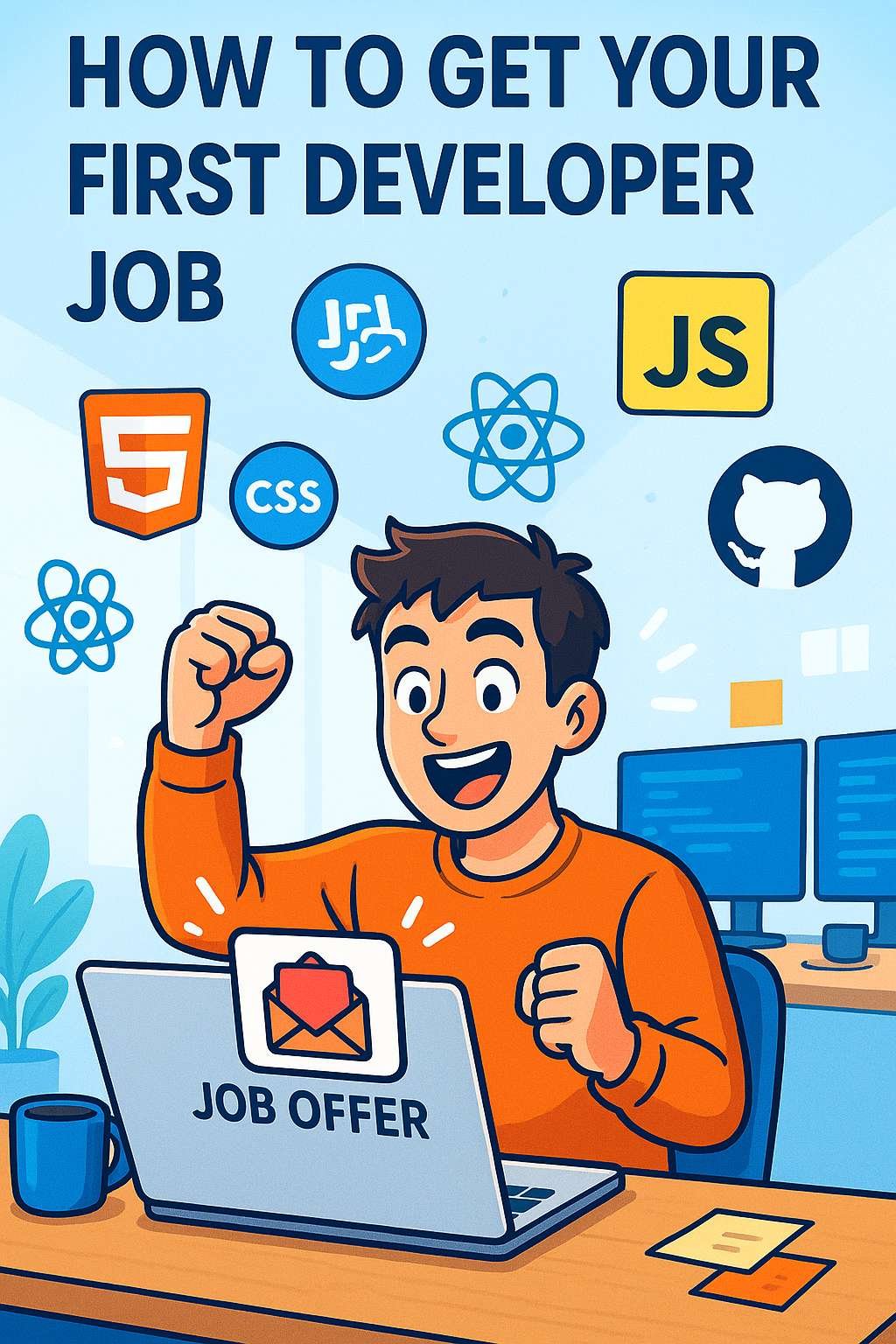
How to Get Your First Developer Job Getting your first developer job might feel overwhelming. You’re competing with CS graduates, bootcamp students, and self-taught developers from around the world. Companies ask for “3 years of experience” for entry-level roles. How can you possibly break in?
How to Get Your First Developer Job
The good news? You don’t need a degree or 5 years of experience — you need a strategy.
This guide will show you how to get your first developer job by:
Building in-demand skills
Creating a project-rich portfolio
Showcasing your work online
Networking with real professionals
Applying smartly and standing out in interviews
- How to Get Your First Developer Job
Let’s break it down step by step.
Learn the Fundamentals of Web Development
Before you apply anywhere, you need a solid base in coding. For most entry-level jobs, that means web development skills:
Front-End (Client Side)
HTML & CSS: Structure and style your websites
JavaScript (ES6+): Make them interactive
Responsive Design: Use Flexbox, Grid, Media Queries
Back-End (Server Side)
Node.js / Express.js (or Python with Flask/Django)
Working with APIs (GET, POST, CRUD)
Databases: MongoDB, PostgreSQL, or MySQL
External Resources to Learn From
freeCodeCamp.org – free full curriculum
The Odin Project – complete open-source roadmap
MDN Web Docs – official docs
Step 2: Choose a Tech Stack
Pick one full stack to master. For beginners:
Front-end: HTML, CSS, JavaScript, React
Back-end: Node.js with Express
Database: MongoDB
Why React? It’s used in over 40% of front-end developer roles (source: Stack Overflow Developer Survey).
Check out our blog on Top Coding Languages in 2025 to stay updated.
Step 3: Build Strong, Real-World Projects
Companies want proof you can build something useful. Build at least 3–5 solid projects:
A To-Do List app with CRUD functionality
A Blog Platform with user authentication
A Weather App using an external API
A React Portfolio site
A Chat App with Socket.io
Push all projects to GitHub and host them online using Vercel, Netlify, or Render.
Learn how to Build Your First Web App with our step-by-step guide.
Step 4: Learn Git and GitHub
Version control is a non-negotiable skill in developer jobs.
Learn These Git Commands:
Create GitHub repos for every project. Make your commits meaningful. Recruiters look at your GitHub profile before hiring.
Our complete guide to Git and GitHub for Beginners.
Step 5: Create a Personal Developer Portfolio
A portfolio is your online resume. It should have:
Your bio and tech stack
Links to your best GitHub projects
A downloadable PDF resume
Contact info or a contact form
Use React, Next.js or plain HTML/CSS. Keep it clean and professional.
Inspiration:
Pro Tip: Add a blog section to your site. Write posts like “How I Built My Weather App in React” — it shows communication and documentation skills.
Step 6: Start Applying for Internships and Freelance Work
While you’re learning, start working.
Look for freelance gigs on Upwork, Fiverr, and PeoplePerHour
Reach out to local businesses — offer to build their websites
Join open-source projects on GitHub or First Contributions
This builds real experience for your resume.
Step 7: Build a Resume That Gets You Interviews
Recruiters scan resumes in 7 seconds.
Make sure yours:
Is 1 page
Lists your tech stack and top skills
Has bullet points with project achievements
Includes GitHub and portfolio links
Is tailored to each job description
Use Canva Resume Builder or Overleaf Templates for clean designs.
Step 8: Master the Coding Interview Process
You’ll need to pass technical screens and behavioral interviews.
Practice These Concepts:
Arrays and Strings
Recursion
Hash Maps
Linked Lists
Binary Trees
Big-O notation
Use LeetCode, Exercism, or AlgoExpert.
For practice, see our post on Common Beginner Mistakes in Coding.
Step 9: Build Your Network in the Developer Community
Networking helps you get job referrals, freelance gigs, and mentorship.
Ways to Network:
Join Discords like CodeSupport
Attend local meetups via Meetup.com
Follow and comment on devs on Twitter (X) and LinkedIn
A simple “Hey, I’m building this, would love feedback” can lead to amazing opportunities.
Step 10: Apply Strategically to Developer Jobs
Don’t apply randomly. Use a tracker (Trello, Notion, Google Sheets) to:
Track job titles, companies, links, and dates
Customize each application
Follow up after 5–7 days
Best Job Boards for Entry-Level Devs
Himalayas (remote jobs)
AngelList Talent – for startups
Bonus Tips
Join a Coding Bootcamp (Optional)
If you want structure, join Scrimba, CareerFoundry, or Microverse — they have job support.
Don’t Wait to Be “Ready”
Apply as soon as you can build basic apps and explain your code. You’ll learn a lot by doing.
Keep Learning During Your Job Hunt
Use downtime to:
Improve your UI/UX skills
Learn TypeScript or testing frameworks
Explore deployment with CI/CD tools
Final Thoughts
You can get your first developer job without a degree. Thousands have done it — so can you.
Focus on:
Strong fundamentals
Great projects
Clear documentation
Networking with intention
Strategic applications
You won’t land your first job overnight, but with persistence and smart planning, you’ll get there.